Knee, Hip and Leg Pain
Advanced Assessment, Diagnosis and Long-Term Solutions in Prestonpans, East Lothian
Knee, Hip and Leg Pain Is Rarely Just About the Painful Area
Pain in the knee, hip, or leg is extremely common — but it’s also commonly misunderstood.
Many people are told:
- “Your knee is worn out”
- “Your hip is stiff”
- “Your scan looks normal”
- “Just strengthen it and see how you go”
Yet the pain persists.
At Adam Smith Podiatry & Sports Clinic, we look beyond the painful joint to understand how forces travel through the legs, how movement patterns develop, and why tissues are being overloaded in the first place.
Our goal is not short-term relief — it’s a clear explanation and a long-term solution.
Step One: Understanding the Whole Picture
Knee, hip, and leg pain often develop due to:
- Altered foot mechanics
- Gait inefficiencies
- Strength imbalances
- Reduced joint mobility
- Poor load distribution
- Compensation after injury
Pain may be felt at the knee or hip — but the cause may lie elsewhere.
That’s why assessment is the most important step.
A Comprehensive Assessment — Not Guesswork
Clinical Examination
Your journey begins with a thorough assessment including:
- Pain history and triggers
- Activity, sport, and work demands
- Previous injuries
- Joint range of movement
- Muscle strength and control
- Functional movement patterns
But clinical assessment is only the starting point.
Advanced Technology to Find the True Cause
FootScan® Pressure Analysis
FootScan allows us to see how pressure is distributed under your feet when you walk.
This is critical because:
- Abnormal foot loading can overload knees and hips
- Small pressure changes can lead to large force differences higher up the leg
- Knee and hip pain often reflect compensation from below
FootScan helps identify:
- Asymmetrical loading
- Excessive forces
- Timing issues during gait
Motion Metrix 3D Gait Analysis
Motion Metrix provides markerless 3D movement analysis, allowing us to assess:
- Knee and hip angles during walking or running
- Pelvic control and symmetry
- Stride mechanics
- Movement patterns linked to injury risk
This technology is particularly valuable for:
- Runners
- Footballers and court-sport athletes
- Persistent or unexplained pain
- Performance-related issues
Strength Testing (EasyForce®)
Weakness is one of the most common — and overlooked — contributors to knee and hip pain.
EasyForce allows us to:
- Objectively measure muscle strength
- Identify side-to-side differences
- Highlight deficits contributing to overload
- Track rehabilitation progress accurately
This removes guesswork and ensures rehab is specific and effective.
Joint Range of Movement (EasyAngle®)
Restricted or excessive movement changes how load is absorbed.
EasyAngle helps us quantify:
- Hip and knee mobility
- Ankle contribution to leg loading
- Symmetry between sides
This ensures we don’t miss movement restrictions driving pain.
Balance & Stability (EasyBase®)
Poor balance and control increase joint stress and injury risk.
EasyBase helps assess:
- Weight-bearing control
- Stability during movement
- Deficits contributing to knee or hip strain
Diagnostic Ultrasound — When It Adds Clarity
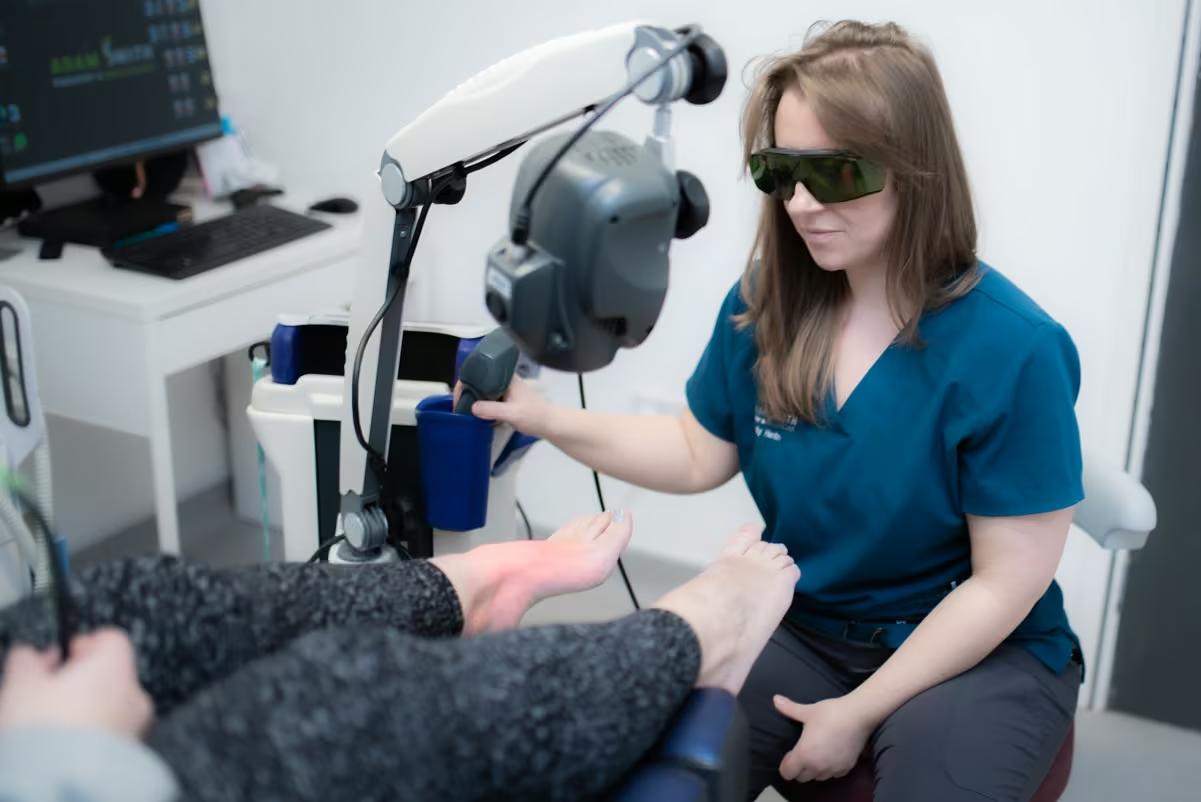
Where soft tissue injury is suspected, diagnostic ultrasound may be used to:
- Confirm tendon or muscle injury
- Assess joint inflammation
- Differentiate between similar conditions
- Guide treatment decisions
Ultrasound is used selectively — only when it adds value.
Turning Information Into a Plan
Once we understand why your knee, hip, or leg hurts, we build a clear, personalised plan focused on:
- Reducing pain
- Restoring efficient movement
- Improving tissue capacity
- Preventing recurrence
Every recommendation is based on findings — not routine.
Targeted Treatments — Used Intelligently
Depending on your diagnosis, treatment may include:
Shockwave Therapy
For chronic or stubborn tendon and soft tissue pain.
Joint Mobilisation & Soft Tissue Therapy
To restore movement and reduce compensatory strain.
Injection Therapy
Used selectively for inflammatory or degenerative joint pain.
Acupuncture, Laser & Magnet Therapy
To reduce pain and improve tolerance to rehabilitation.
These treatments support recovery — but they are never the whole solution.
Rehabilitation: Where Real Change Happens
Lasting improvement depends on rehabilitation that matches your assessment findings.
Our rehab programmes:
- Are built around measured deficits
- Focus on lower-limb strength and control
- Address movement efficiency
- Use video-guided exercises
- Are progressed objectively over time
Rehab is essential — whether you’re injured, recovering, or trying to prevent recurrence.
Orthotics and Footwear — When They Matter
Because knee and hip pain are often influenced by foot mechanics, we assess whether:
- Orthotics
- Footwear changes (e.g. HOKA)
can:
- Reduce joint loading
- Improve alignment
- Support rehab
- Protect long-term joint health
Nothing is prescribed unless it adds clear value.
Conditions We Commonly See
Knee, hip, and leg pain often includes:
- Patellofemoral knee pain
- Knee osteoarthritis
- Tendinopathies
- Hip pain and stiffness
- Running-related injuries
- Recurrent “mystery” pain
- Post-injury compensation
A Process — Not a Quick Fix
We don’t chase pain.
We don’t rely on generic protocols.
We don’t guess.
We:
- Assess
- Measure
- Explain
- Treat
- Rebuild
And we aim for lasting results.
Why Choose Adam Smith Podiatry and Sports Clinic?
At our Prestonpans clinic, knee, hip, and leg pain care is:
- Assessment-led
- Technology-supported
- Movement-focused
- Integrated with rehab and footwear
- Built around long-term outcomes
Supporting patients from Prestonpans, East Lothian, Musselburgh, Tranent, Haddington, and Edinburgh.
Ready to Get to the Root of Your Pain?
If knee, hip, or leg pain is limiting you — and you want clear answers and a proper plan — we’re here to help.
Book a knee, hip & leg pain assessment today and take the first step toward confident, pain-free movement.