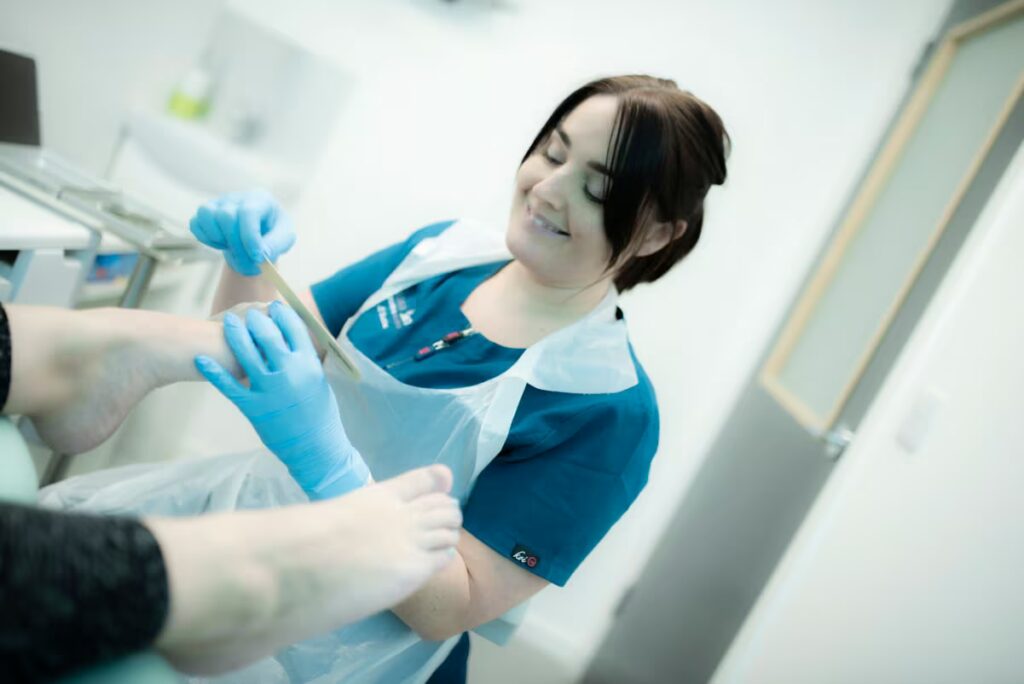
Bunions
A bunion is one of the few foot problems people can see, which means most patients arrive having already read a lot of nonsense about it. Here's a straight account of what it is and what actually helps. Typical symptoms:- A bony bump at the base of the big toe
- The big toe drifting towards the second toe
- Redness, swelling or a sore patch where shoes rub
- Aching across the ball of the foot after a day on your feet
- Difficulty finding shoes that fit
- Sometimes a second toe that has started to claw or sit on top

What is a bunion?
A bunion, or hallux valgus, is a change in the position of the joint at the base of the big toe. The toe angles outwards, and the bone behind it drifts inwards, which is what produces the bump.It's a joint problem, not a growth. The lump is bone that has always been there, now sitting in the wrong place.
The important part is what it does to your walking. A big toe that can't do its job pushes load onto the rest of the forefoot, which is where the aching usually comes from.
What causes it?
- Family history, which is the strongest single factor
- Foot mechanics, particularly a foot that rolls in through the step
- Years of narrow or pointed shoes, which speed it up rather than cause it
- Hypermobility
- Inflammatory arthritis, in some cases
Why come to us about a bunion
We'll tell you honestly what can and can't be changed.
Nothing non-surgical straightens a bunion. Plenty of things make it less painful and may slow it down, and we'll be clear which is which.We treat the loading, not just the lump.
Most bunion pain comes from how the foot works, not from the bump itself.We can scan the joint
To look at its condition, which matters for what's realistic.We know when to refer.
If you're at the point where surgery is the right answer, we'll say so rather than selling you years of appointments.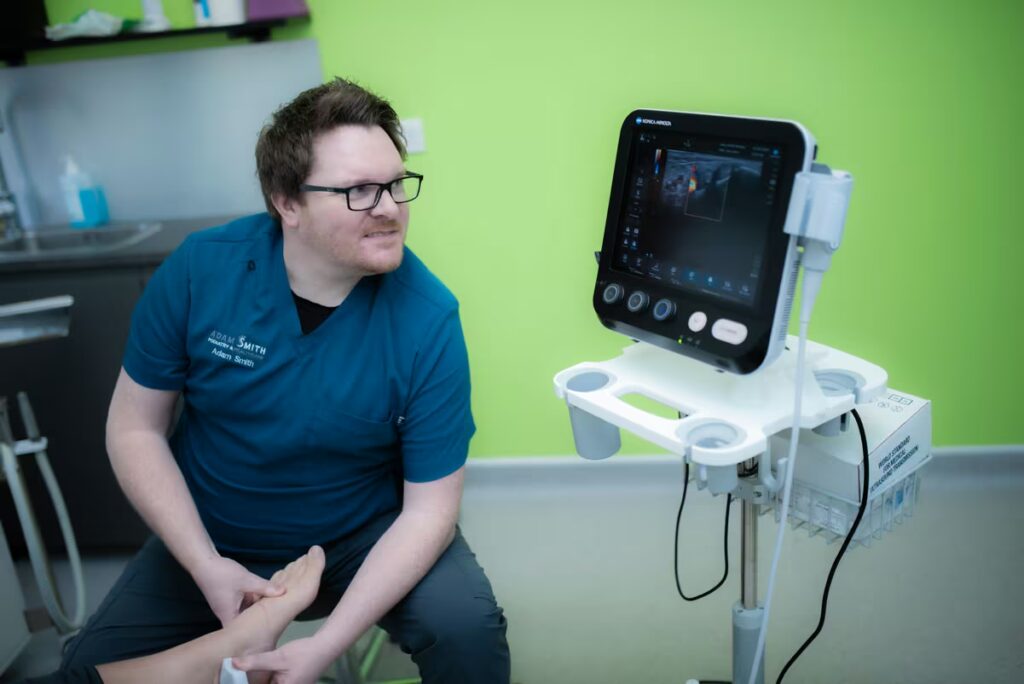
What happens at your assessment
Step 1
We ask what actually bothers you: the appearance, the pain, the shoes, or all three.
Step 2
We examine the joint, how much movement it has and how it loads.
Step 3
We look at the rest of the foot, since the second toe and the ball of the foot often carry the consequences.
Step 4
We scan or arrange imaging where the joint's condition will change the plan.
Step 5
We assess your walking and your pressure distribution.
How we manage bunions
- Footwear advice, which is often the biggest single change.
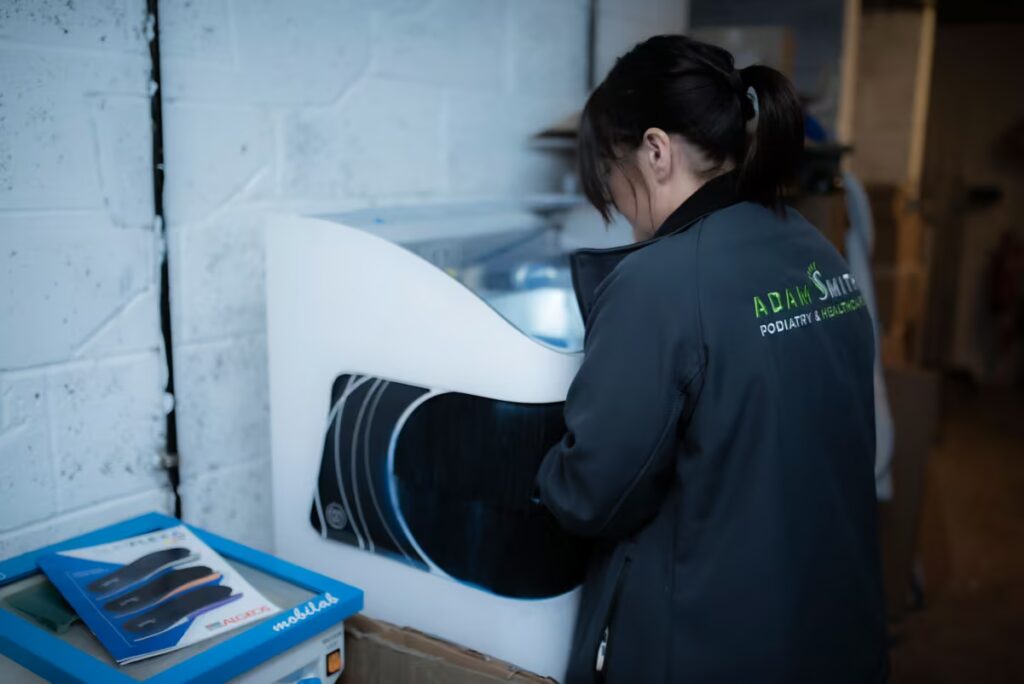
- Custom orthotics, to control the motion that drives the deformity and offload the forefoot.
- Padding and protection, for the spot that rubs.
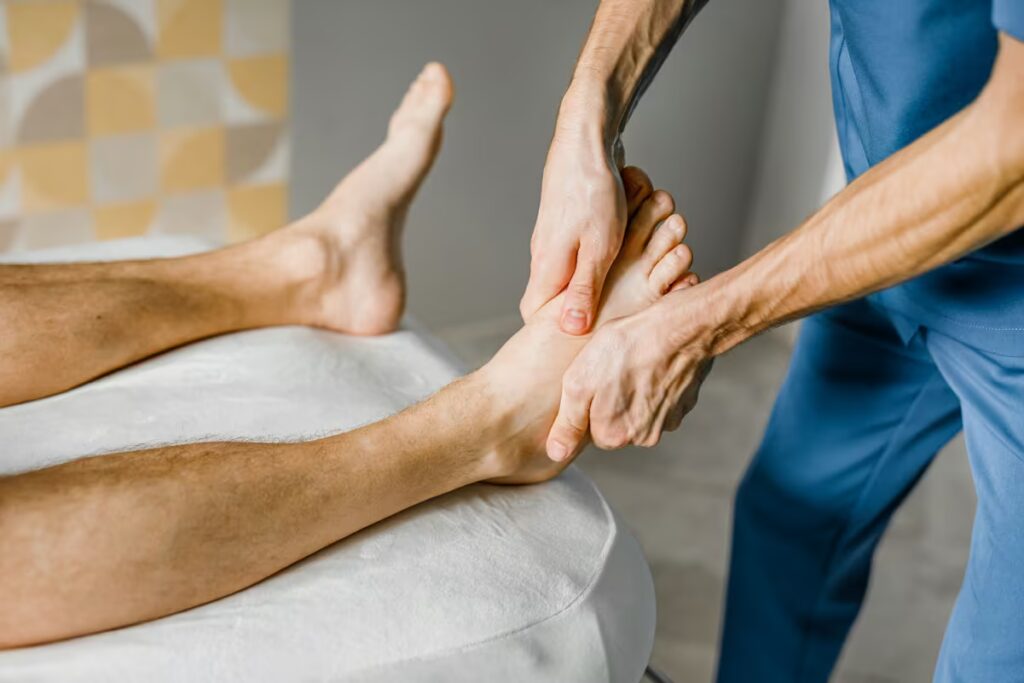
- Joint mobilisation, to maintain movement in the big toe.
- Routine podiatry (our Complete Podiatry Appointment), for the callus and corns that often form alongside it.
- Referral for a surgical opinion, when pain or function justify it.
Prices
Appointment
Length
Price
Ultimate MSK (full assessment plus Run3D gait analysis)
90 minutes
£295
Pain & Injury Follow-up (shockwave, laser or acupuncture)
30 minutes
£85
Ultrasound and assessment, with Adam
45 minutes
£195
Insoles and custom orthotics
30 minutes
£80 to £250
Complete Podiatry Appointment
30 minutes
£59
Frequently asked questions
Can orthotics straighten my bunion?
No, and anyone who tells you otherwise is selling something. Orthotics change how the foot loads, which can reduce pain and may slow progression.
Do bunion correctors and toe spacers work?
Spacers can be comfortable. Night splints don't change the bone position in adults. They're not harmful, they just don't do what the packaging implies.
Will it definitely get worse?
Most progress slowly over years. Some stay stable for decades. Footwear and loading make a real difference to the rate.
Should I have surgery?
Surgery is for pain and function, not appearance. If it's sore despite sensible footwear and orthotics, or it's stopping you doing things, it's reasonable to get an opinion.
My bunion doesn't hurt. Should I do anything?
It's worth an assessment to understand the mechanics and to protect the joint. It's not worth treating aggressively if it isn't bothering you.
Can children get them?
Yes. Juvenile hallux valgus exists and usually runs strongly in families. It's worth assessing early.
If your bunion is starting to dictate which shoes you can wear, it's worth a proper look.