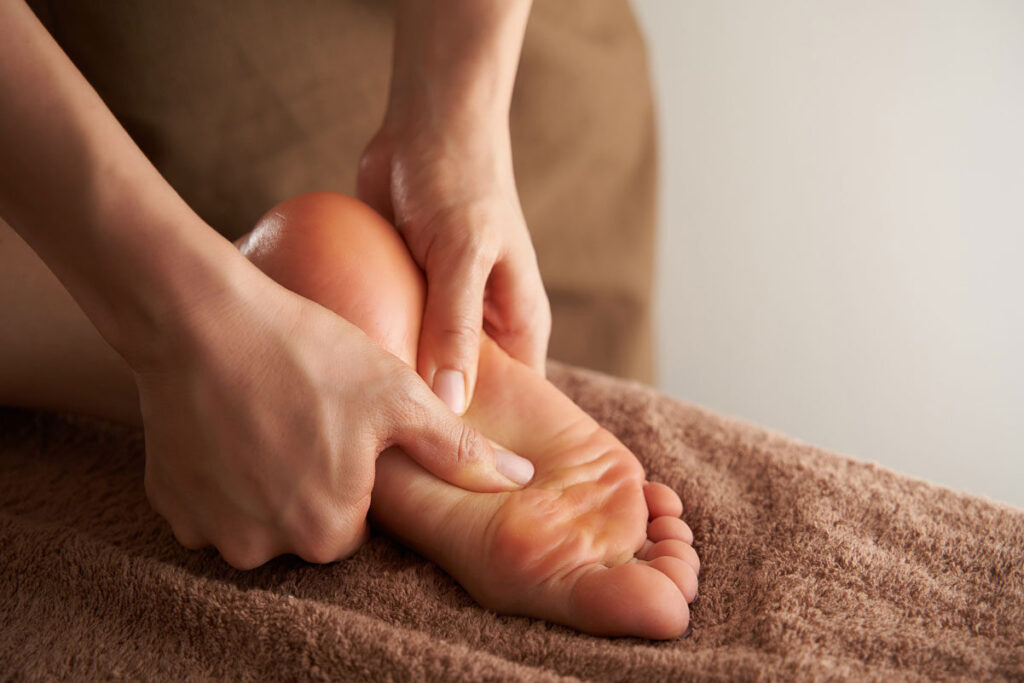
Flat Feet
Flat feet are extremely common and most of the time entirely fine. The question worth answering isn't whether your arch is low, but whether it's causing you a problem. What brings people in:- Aching in the arch or inner ankle after standing or walking
- Tired, heavy legs at the end of the day
- Knee or hip pain that nobody has linked to the feet
- Shoes wearing down unevenly on the inside
- A parent worried about a child's foot shape
- An arch that has flattened recently in adulthood, which is the one that needs looking at

What are flat feet?
A flat foot is one where the inside arch sits low or touches the ground when you stand. Some are flexible, with an arch that appears when you go up on your toes. Some are rigid.A flexible flat foot in someone with no pain is a foot shape, not a condition. Plenty of athletes have them.
What matters is whether the foot can control itself through the step. A foot that rolls in and keeps rolling puts strain further up the chain, and that's often where knee and hip pain comes from.
When flat feet need attention
- When they hurt, in the arch, the inner ankle or the heel
- When the arch has dropped in adulthood, particularly on one side, which can point to a problem with the tendon that supports it
- When they're rigid rather than flexible
- When a child has pain, is avoiding activity, or the feet are very different from each other
- When knee, hip or back pain isn't responding and nobody has looked at the feet
Why come to us
We assess the whole chain.
Flat feet rarely cause problems in isolation, and the pain is often somewhere else entirely.We scan the tendons.
An adult arch that has collapsed often involves the tibialis posterior tendon, and ultrasound shows its condition. Caught early, it's much easier to manage.We're straight with parents.
Most children's flat feet are entirely normal and need nothing. We'd rather reassure you than sell you insoles. Jill leads our children's care.We measure rather than eyeball.
Pressure analysis and 3D gait analysis show what the foot does when it's moving and loaded, which is the only time it matters.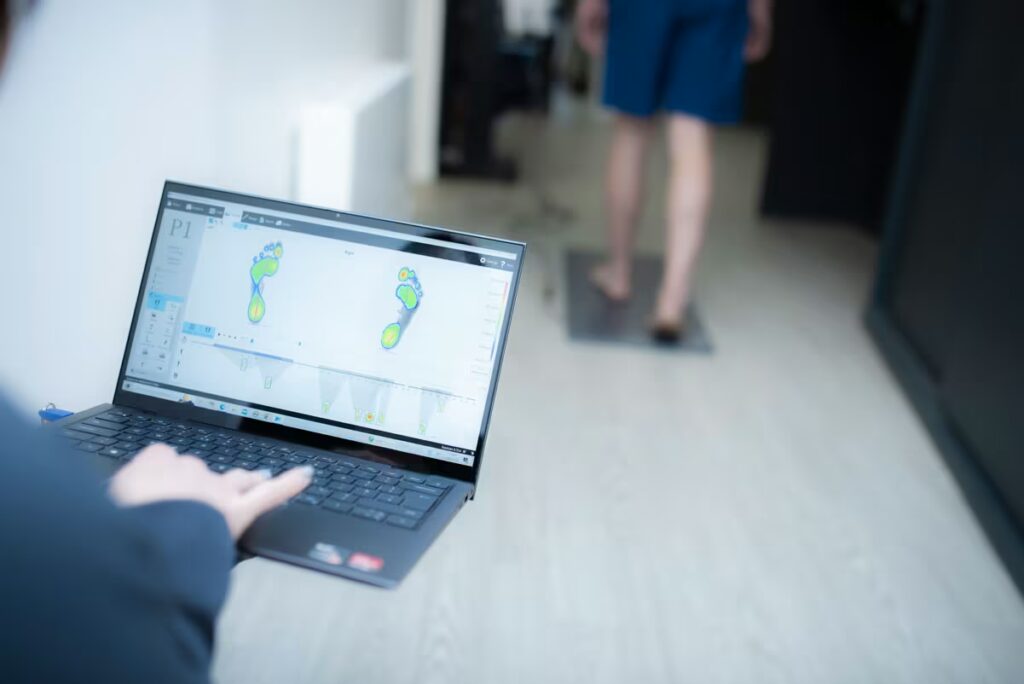
What happens at your assessment
Step 1
We find out what's actually bothering you, and whether anything has changed.
Step 2
We examine the foot standing, sitting and moving, and test whether the arch is flexible.
Step 3
We test the tendons that support the arch.
Step 4
We look at your walking, and your running if relevant.
Step 5
We tell you plainly whether this needs treating.
How we treat flat feet that are causing problems
- Strength work for the foot and the muscles that support the arch, which is where most of the improvement comes from.
- Custom orthotics or off-the-shelf insoles, where the foot needs support it can't provide itself.
- Footwear advice, since the right shoe does a surprising amount of this work.
- Treatment for the tendon itself, where ultrasound shows it's involved. This may include shockwave or laser therapy.
- A graded rehabilitation plan, rather than permanent reliance on an insole.
Prices
Appointment
Length
Price
Ultimate MSK (full assessment plus Run3D gait analysis)
90 minutes
£295
Pain & Injury Follow-up (shockwave, laser or acupuncture)
30 minutes
£85
Ultrasound and assessment, with Adam
45 minutes
£195
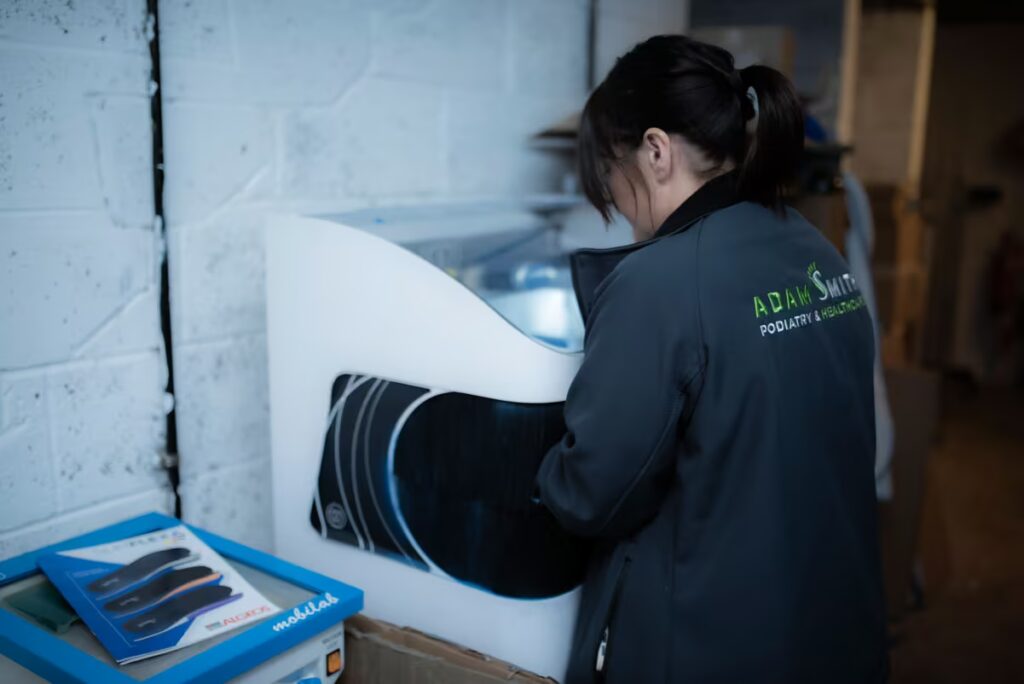
Insoles and custom orthotics
30 minutes
£80 to £250
Frequently asked questions
My child has flat feet. Should I worry?
Almost always no. Arches develop through childhood, and many children don't have one until they're seven or eight. If they're comfortable and running around happily, they're fine. Come in if there's pain or they're avoiding activity.
Do I need insoles?
Only if your feet are causing symptoms. Flat feet with no pain don't need treating.
Can I strengthen my arch?
You can meaningfully improve how your foot controls itself. Changing the actual bone structure isn't realistic in adults.
My arch has dropped recently. Is that different?
Yes, and it's worth getting seen. A newly flattening arch in an adult, especially on one side, can mean the supporting tendon is struggling. Early treatment matters.
Can flat feet cause knee or back pain?
They can contribute. It's rarely the only factor, which is why we assess further up rather than just looking at the foot.
Will I always need orthotics?
Not necessarily. For many people they're a tool while strength and loading improve.
If your feet, knees or hips ache and nobody has looked at how you actually stand and walk, start there.