Heel Pain and Plantar Fasciitis
If your first few steps out of bed are the worst part of your day, you probably have plantar fasciitis. It's the most common cause of heel pain we see, and the one people put up with for longest before they come in. Typical symptoms:- Sharp or bruised pain under the heel, worst first thing in the morning
- Pain that eases after a few minutes of walking, then returns later in the day
- A heel that aches after standing, or the day after a long walk
- Tenderness when you press the inside of the heel
- Pain that's worse after exercise rather than during it

What is plantar fasciitis?
The plantar fascia is a thick band of tissue running along the sole of your foot, from the heel to the toes. It works like a tie-rod, holding the arch up and storing energy with every step.When it's overloaded, the tissue where it attaches to the heel becomes irritated and thickened. Despite the name, long-standing cases are usually degenerative rather than inflamed, which is why anti-inflammatory gels and rest alone often stop working after a while.
It affects runners, people who stand all day on hard floors, and plenty of people who've done nothing unusual at all.
What causes it?
- A sudden increase in walking, running or time on your feet
- Shoes with no support, or a change to flatter footwear
- Tight calves, which pull on the heel through the Achilles
- Foot shape, including both flat feet and very high arches
- Weight gain, which raises the load through the arch with every step
- Reduced ankle movement, often from an old injury
Why come to us for heel pain
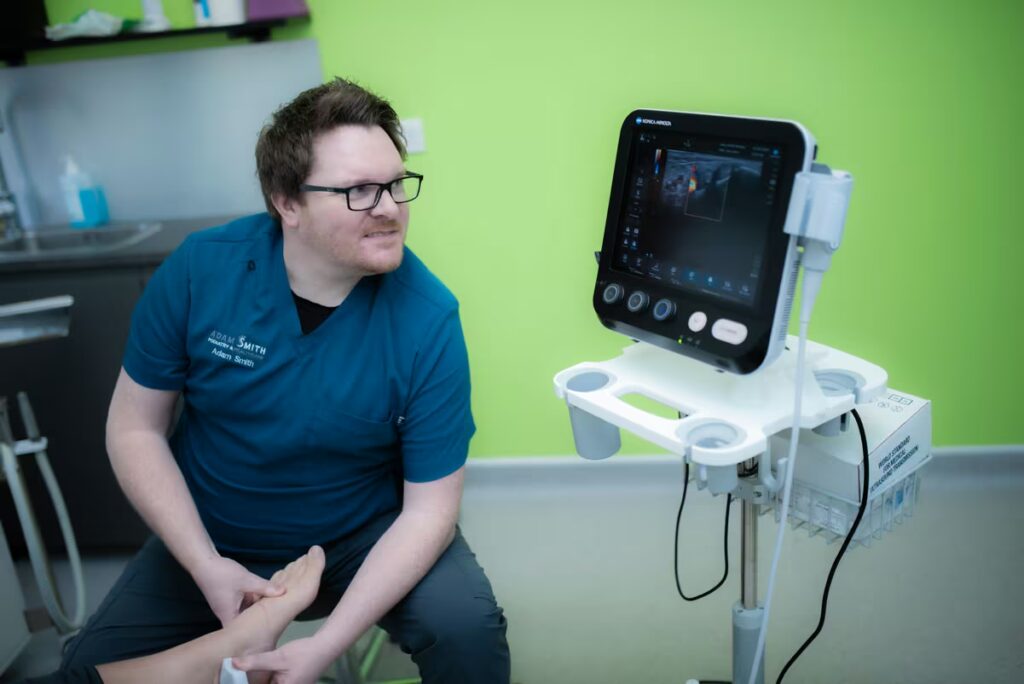
We scan it.
Our in-clinic diagnostic ultrasound shows the thickness and condition of your fascia, so we're treating what's actually there rather than guessing from where it hurts.Our scanning is CASE accredited
Carried out by Adam, who holds a postgraduate certificate in lower limb musculoskeletal ultrasound.We check how you're loading it.
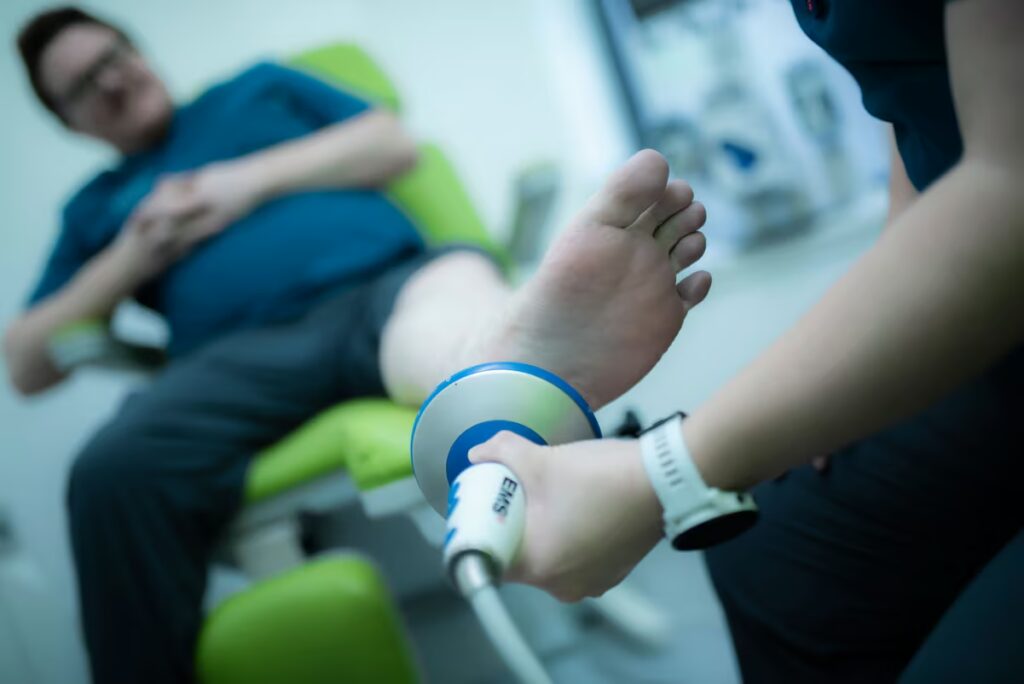
Pressure analysis and gait assessment show us the loading pattern that caused this.We have shockwave and laser on site
Which we use for heel pain that hasn't settled with simpler care.We see a lot of it in sport.
We're podiatrists to Hibernian FC, and runners and footballers make up a big part of our week.We tell you how long it's likely to take.
Plantar fasciitis usually takes a few months of the right loading, and we'd rather be straight with you about that.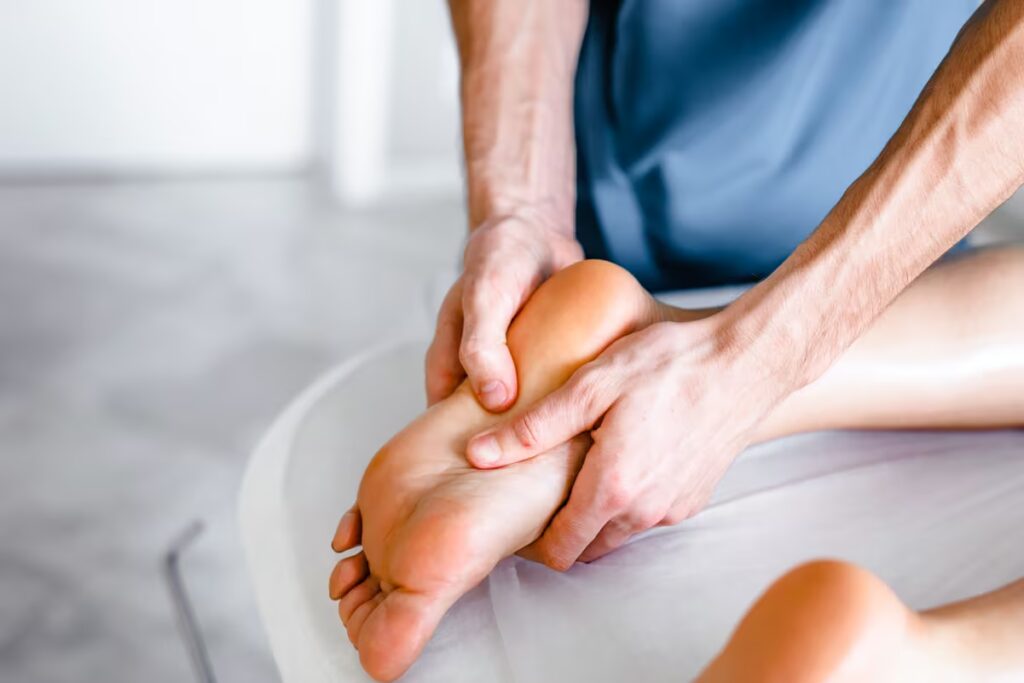
What happens at your assessment
1. We listen.
When it started, what makes it worse, what you've already tried, and what you want to get back to.
2. We examine.
Your foot, your calf, your ankle movement and the way you load the heel.
3. We scan if it will change the plan.
Ultrasound confirms plantar fasciitis and rules out the other causes of heel pain that get mistaken for it.
4. We look at how you move.
Pressure plate analysis, plus Run3D 3D gait analysis in an Ultimate MSK appointment.
5. We give you a plan,
Written down, with what to do at home and what we'll do in clinic.
How we treat plantar fasciitis
- Loading and strength work. The most important part of treatment is the right amount of load at the right time. You'll get a specific programme, not a sheet of generic stretches.
- Shockwave therapy, for heel pain that has lasted more than three months. A typical course is about six appointments over around eight weeks, a week apart.
- MLS laser therapy, to help with pain, often run alongside shockwave.
- Orthotics and footwear. Custom orthotics or off-the-shelf insoles to take tension off the fascia, plus honest advice on your shoes.
- Soft tissue work and joint mobilisation, where a tight calf or stiff ankle is part of the picture.
- Injection therapy, occasionally, where symptoms are severe and stopping you doing the rehab that helps it settle.
Prices
Appointment
Length
Price
Ultimate MSK (full assessment plus Run3D gait analysis)
90 minutes
£295
Pain & Injury Follow-up (shockwave, laser or acupuncture)
30 minutes
£85
Ultrasound and assessment, with Adam
45 minutes
£195
Insoles and custom orthotics
30 minutes
£80 to £250
Frequently asked questions
Why is it worst first thing in the morning?
The fascia shortens overnight while you sleep. Those first steps stretch it suddenly, which is why they hurt most. It usually eases within ten or fifteen minutes.
Will it go away on its own?
Sometimes, eventually. But the things that caused it are still there, so it commonly comes back or drags on for a year or more. Treatment is mostly about shortening that.
Is it a heel spur?
Usually not. Plenty of people have heel spurs and no pain at all, and plenty have plantar fasciitis with no spur. The spur is a result of long-term pull on the heel rather than the thing causing your pain.
Should I rest completely?
No. Complete rest makes the tissue weaker and the problem comes back as soon as you start again. We'll tell you what to keep doing and what to pull back on.
How long does it take?
It varies. A typical treatment course is about six appointments over around eight weeks, and the fascia often keeps settling for a few months after that, longer if it had been sore for a year before you came in. We'll give you our estimate at your first appointment.
Do I need a referral?
No. Book directly.
Heel pain that's been there more than a few weeks rarely sorts itself out.
Book in and we'll find out what's actually going on.