Morton's Neuroma
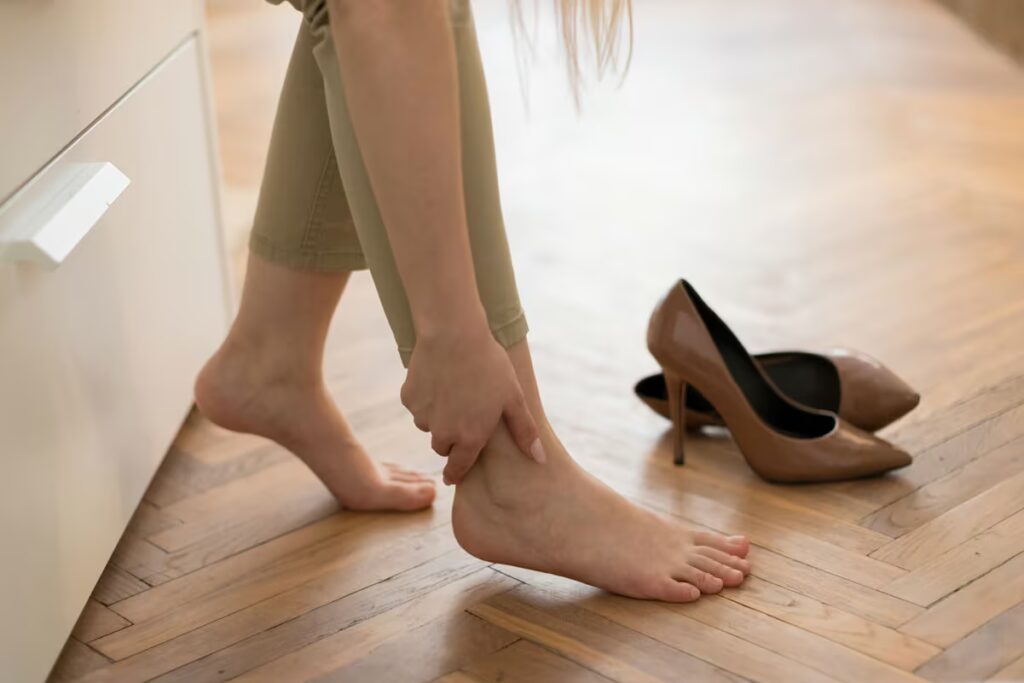
A burning pain between the toes, numbness in two toes that touch, and the feeling of walking on a pebble or a rucked-up sock. People take their shoe off and rub the foot. That's Morton's neuroma. Typical symptoms:- Burning or shooting pain in the ball of the foot, usually between the third and fourth toes
- Numbness or pins and needles in the two toes either side
- A sensation of something bunched under the foot
- Worse in tight or narrow shoes, better barefoot
- Sometimes a click you can feel when you squeeze the foot
What is Morton's neuroma?
It's a thickening of the tissue around one of the nerves running between the long bones of your foot, most often between the third and fourth toes where the space is tightest.The nerve gets compressed and irritated, and the body's response is to thicken the sheath around it, which makes the space tighter still. That's why it rarely settles on its own once it's established.
What causes it?
- Narrow or pointed shoes, and high heels, which squeeze the bones together
- High-impact activity, particularly running
- Foot shape, including flat feet and high arches
- Instability in the forefoot, letting the bones move against each other
- A longer second toe or an unstable first toe, which shifts load sideways
Why come to us
We scan it rather than guessing.
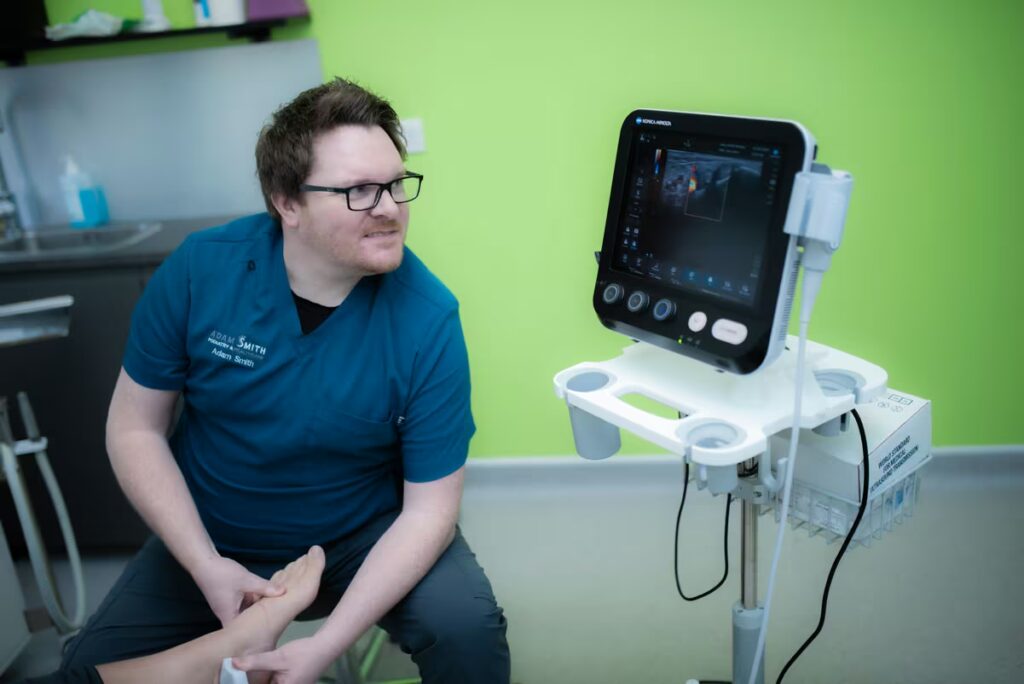
Ultrasound shows the neuroma, its size, and which space it sits in. Several other things cause pain in the ball of the foot, and they're treated completely differently.Our scanning is CASE accredited and done here,
By Adam, so you're not waiting weeks for imaging somewhere else.We can inject under ultrasound guidance,
Which means the injection goes exactly where it needs to.We treat the cause as well as the symptom.
A neuroma that formed because of how your forefoot loads will come back unless that's dealt with.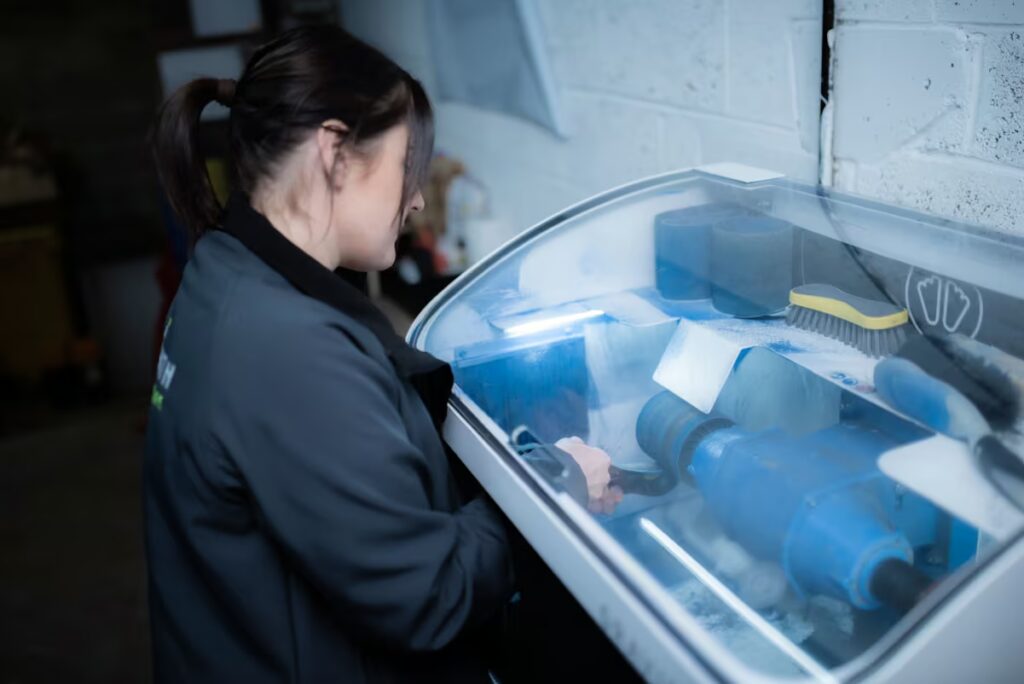
What happens at your assessment
Step 1
We take a history, including which shoes bring it on.
Step 2
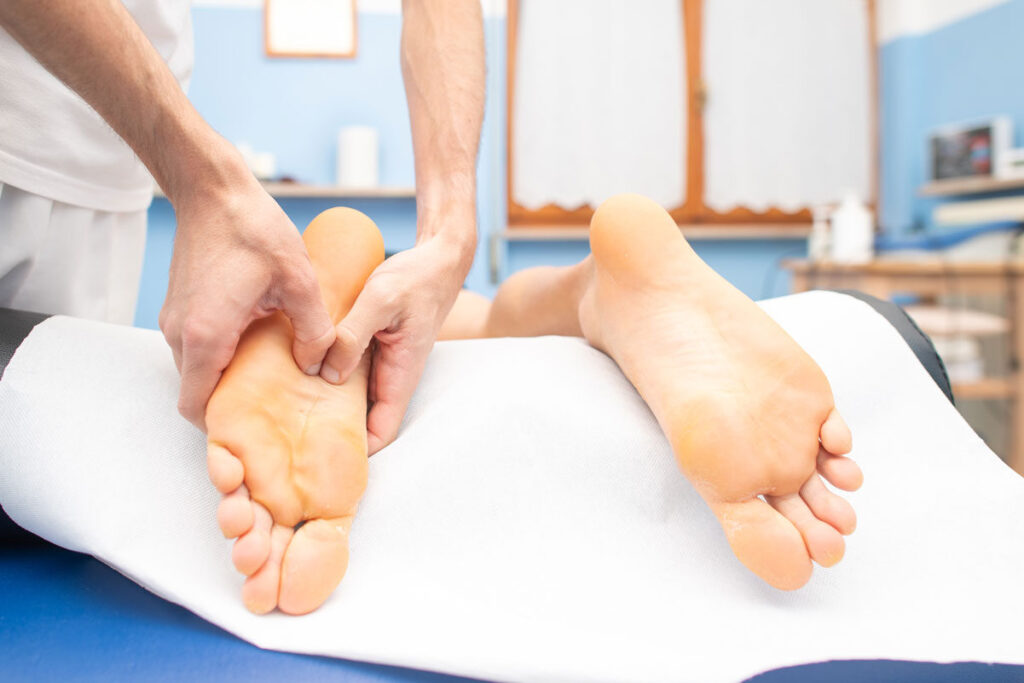
We examine the forefoot and test the specific spaces between the bones.
Step 3
We scan, to confirm it's a neuroma, measure it, and rule out a stress fracture, bursitis or capsulitis, which can feel similar.
Step 4
We look at your loading through pressure analysis.
Step 5
We set out the options in order, starting with the least invasive.
How we treat Morton's neuroma
- Footwear first. A wider toe box and a lower heel change the pressure straight away, and for smaller neuromas this alone can be enough.
- Orthotics with a metatarsal dome, to spread the bones apart and lift pressure off the nerve.
- Injection therapy, guided by ultrasound, where the pain is significant. It can settle symptoms, and how it responds also helps confirm the diagnosis.
- Shockwave therapy, in some cases.
- Soft tissue work and mobilisation, where forefoot stiffness is part of it.
- Onward referral for surgery, in the small number of cases where nothing else holds. We'll tell you honestly when you're at that point.
Prices
Appointment
Length
Price
Ultimate MSK (full assessment plus Run3D gait analysis)
90 minutes
£295
Pain & Injury Follow-up (shockwave, laser or acupuncture)
30 minutes
£85
Ultrasound and assessment, with Adam
45 minutes
£195
Insoles and custom orthotics
30 minutes
£80 to £250
Injection therapy
30 minutes
£195
Frequently asked questions
Is it a tumour?
No. The name is misleading. It's thickened tissue around a nerve, not a growth, and it isn't dangerous.
Why does taking my shoe off help?
Because the shoe is squeezing the bones together onto the nerve. That's also one of the clearest signs it's a neuroma rather than something else.
Will I need surgery?
Most people don't. Many manage well with footwear, orthotics and, where needed, an injection.
Can it come back after an injection?
It can, if the loading that caused it hasn't changed. That's why we treat the mechanics too.
Can I keep running?
Usually yes, in the right shoes and often with an orthotic. We'll be specific about that.
How quickly will I know if treatment is working?
Some people notice a difference within a few weeks of changing footwear and orthotics. We'll review it with you and talk about the next step if it hasn't changed.
If you've been taking your shoe off to rub the ball of your foot, book an assessment and let us scan it.