
Shin Splints
Pain along the inside edge of your shin when you run is one of the most common complaints we see from people who've just started training or just increased their mileage. It's also the one most likely to be ignored until it stops you entirely. Typical symptoms:- Aching or sharp pain along the inner edge of the shin bone
- Sore at the start of a run, sometimes easing, then worse afterwards
- Tender along a stretch of bone several centimetres long
- Worse on hard surfaces or in worn shoes
- In the early stages, settles with a few days off, then returns

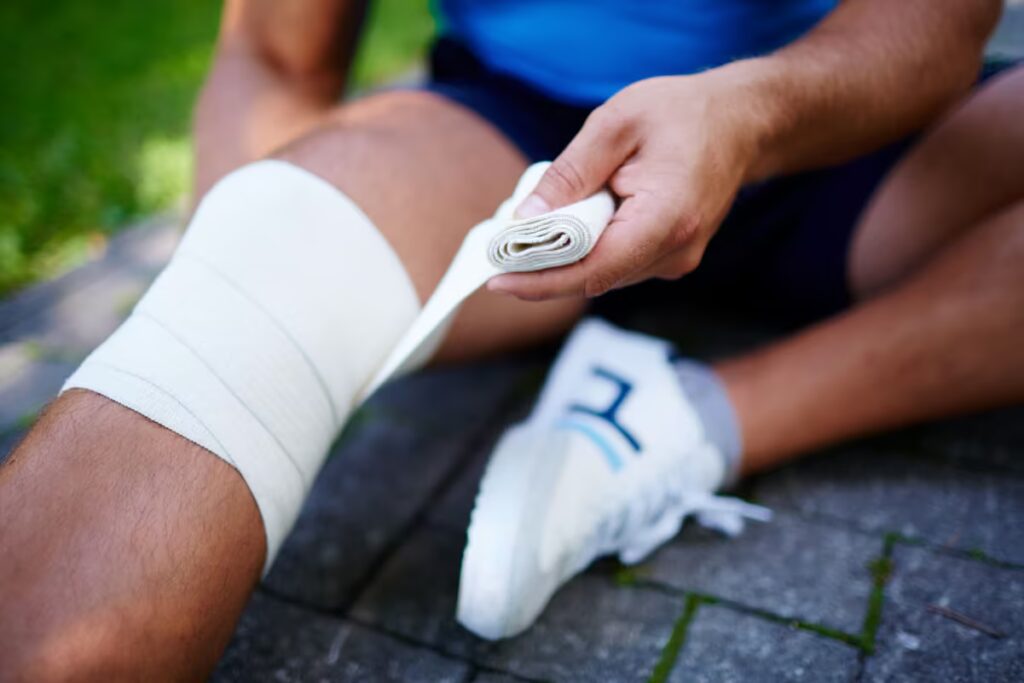
What are shin splints?
Shin splints, properly called medial tibial stress syndrome, is irritation where muscle and connective tissue attach along the inside of the shin bone, together with stress on the surface of the bone itself.It sits on a spectrum. At one end it's a nuisance that settles with a sensible training change. At the other end, untreated, it becomes a stress fracture that costs you months.
That's the reason to get shin pain assessed rather than run through it. Pain that narrows to one specific spot, or that hurts at rest and at night, needs looking at quickly.
What causes it?
- Increasing training load faster than the bone can adapt
- Running on hard or cambered surfaces
- Shoes that are worn out or wrong for you
- Calf weakness and poor shock absorption
- Foot mechanics that increase the pull along the inside of the shin
- Low energy availability, particularly in runners who've also lost weight
Why come to us for shin pain
We measure how you run.
Run3D uses 39 reflective markers and infrared cameras recording 200 times a second, and was developed by scientists at the University of Oxford. It shows what your hips, knees and ankles are doing at running speed. We're the only Run3D clinic in Edinburgh and the Lothians.We can scan the area.
Ultrasound helps us judge soft tissue involvement and spot the cases that need onward imaging for a suspected stress fracture.We know when to refer.
If this looks like a bone stress injury, we'll say so and get you to the right place rather than treating around it.We look at your training, not just your foot.
We see a lot of it in sport.
We're podiatrists to Hibernian FC, and runners and footballers make up a big part of our week.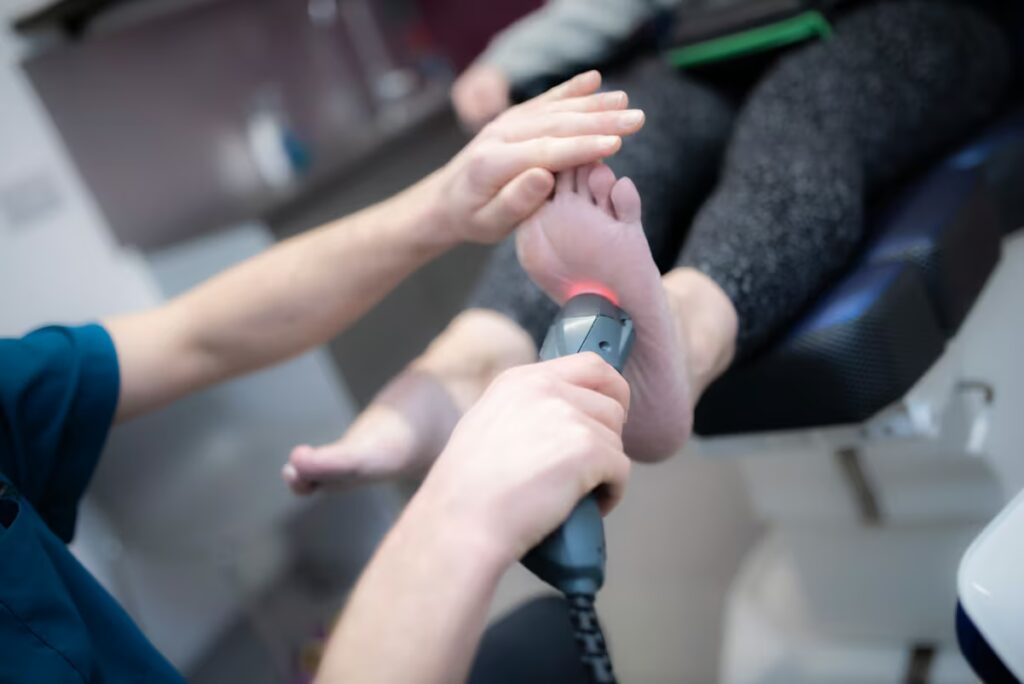
What happens at your assessment
Step 1
We go through your training history in detail, including what changed in the four to six weeks before it started.
Step 2
We examine the shin and map exactly where it's tender.
Step 3
We test your calf and your single leg control.
Step 4
We analyse how you run and how you load, with pressure analysis and, in an Ultimate MSK appointment, Run3D 3D gait analysis.
Step 5
We check your footwear.
Step 6
We give you a plan with specific numbers for what to run and when.
How we treat shin splints
- Load management. Not stopping, usually, but changing how much, how fast and on what.
- Strength work, particularly the calf, which absorbs the impact before the shin has to.
- Gait retraining, where Run3D shows something specific worth changing.
- Footwear and orthotics, to change how the load arrives.
- Shockwave therapy, for stubborn cases that haven't settled.
- Laser therapy, to manage pain through the early phase.
- Onward referral for imaging where we suspect a stress fracture.
Prices
Appointment
Length
Price
Ultimate MSK (full assessment plus Run3D gait analysis)
90 minutes
£295
Pain & Injury Follow-up (shockwave, laser or acupuncture)
30 minutes
£85
Ultrasound and assessment, with Adam
45 minutes
£195
Insoles and custom orthotics
30 minutes
£80 to £250
Frequently asked questions
Can I run through it?
Early on, often yes, at reduced volume. But shin pain that's getting worse week on week, or that has narrowed to one small spot, is the one to stop and get checked.
How do I tell shin splints from a stress fracture?
Shin splints are usually sore along a stretch of bone. A stress fracture is usually one precise point, hurts when you hop, and often aches at rest. If in doubt, get it assessed.
Will new trainers fix it?
Sometimes they help, but shoes bought on the basis of a jog on a shop treadmill are a guess. We'd rather look at what you're actually doing and then advise.
How long until I can train properly again?
It depends how long it's been building and how far along the spectrum it is. Mild cases often settle within a few weeks of the right changes, and established ones take longer. A stress fracture is a different conversation. We'll give you a realistic estimate at your assessment.
Does it come back?
It does if the training pattern that caused it doesn't change, which is why we spend time on that.
If your shins hurt every time you build up your mileage, there's a reason, and it can be measured.